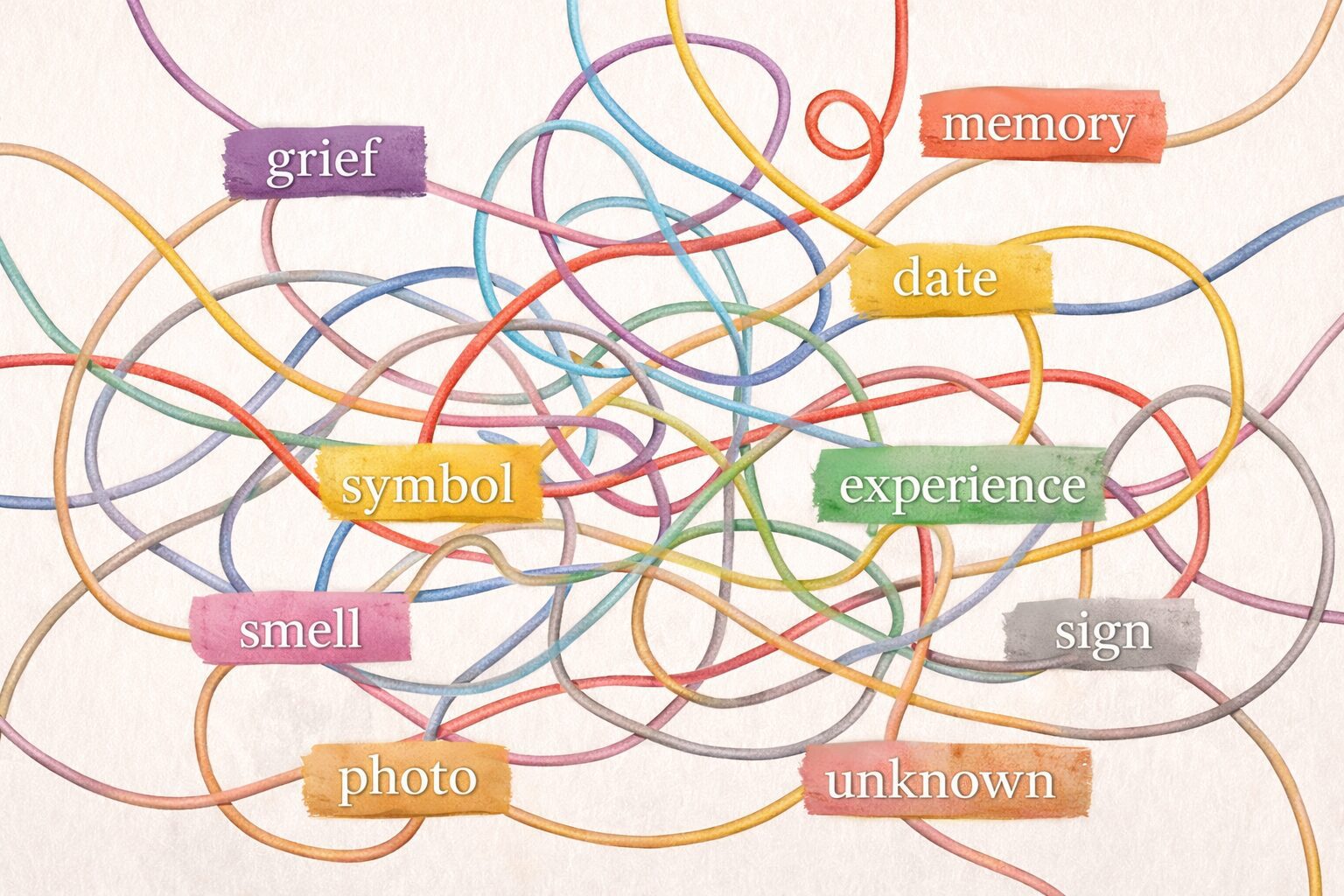

Grief doesn’t move in straight lines.
It doesn’t follow a calendar.
And it certainly doesn’t ask permission before it shows up.
For families walking the road of DIPG/DMG, and especially for those of us living after loss, grief is not just something we carry. It is something that gets stirred, shaken, and sometimes unexpectedly ignited by moments that once felt ordinary.
We often brace ourselves for the obvious days: birthdays, diagnosis anniversaries, angelversaries. We expect holidays to hurt. We prepare for school milestones, family photos, the empty chair at the table.
But it’s the quiet triggers that can take your breath away.
Today is Ash Wednesday. For most of my life, it was simply a holy day. A quiet moment to begin Lent. A smudge on the forehead. A reminder of faith and humility.
But for my son Robbie (Mary’s younger brother) Ash Wednesday has become something entirely different.
For two years now, the thought of going to Mass on this day has brought complete meltdowns. Not because of the service itself.
But because of the words:
“You are dust, and unto dust you shall return.”
Those words, meant to ground us spiritually, bring him right back to the reality of his sister being cremated. The ashes. The finality. The physical reminder that she is not coming home.
And I didn’t see that coming.
As parents and spouses, we often assume we know what will hurt our children or our partners. We think we can anticipate the hard days. But trauma doesn’t announce itself clearly. It hides in songs, in smells, in phrases spoken casually, in dates on a church calendar.
There are layers of grief in DIPG/DMG families that are hard to explain to those outside this community. We have lived through scans and statistics. We watched our children decline. We have heard words no parent should ever hear.
So, when something seemingly small triggers a reaction, it isn’t “overreacting.” It is trauma remembering.
And that remembering can look different for each person.
One sibling may shut down quietly.
Another may rage.
One parent may avoid certain places.
The other may cling tightly to tradition.
None of it is wrong. It is simply grief wearing a different face.
What I am learning (slowly, imperfectly) is that being fully present matters more than being fully prepared. I cannot anticipate every trigger for my children. I cannot erase the words spoken at Mass or remove every reminder from the world.
But I can notice.
I can pause.
I can listen.
When Robbie melts down over Ash Wednesday, my job is not to convince him it’s “just church.” It is to understand that, for him, it is not just church. It is memory. It is loss. It is imagery that his heart is not ready to hold yet.
And for spouses, too, this awareness is critical. The person you love may react to something in a way you don’t immediately understand. Instead of correcting or minimizing, we can ask gently, “What did that bring up for you?”
Grief after DIPG/DMG is complex trauma. It weaves itself into everyday life in ways that surprise us.
And this is where our broader community matters.
Friends, teachers, church members, extended family: you do not have to understand why Ash Wednesday might be unbearable for a child who lost his sister to brain cancer. You don’t have to intellectually connect the dots.
You just have to be there.
You have to listen without trying to fix.
You have to respect boundaries when a family says, “We can’t do that this year.”
You have to hold space without judgment.
Grief triggers are not attention-seeking. They are pain seeking safety.
They are the nervous system saying, “This reminds me of when everything shattered.”
For our DIPG/DMG families walking life after loss, I want you to know: if today hits differently than you expected, you are not alone. If something ordinary suddenly feels unbearable, you are not weak. If your child reacts in a way that surprises you, it does not mean you are failing.
It means you are healing in layers.
And to those walking beside grieving families, thank you for choosing compassion over confusion. Thank you for sitting in the uncomfortable moments. Thank you for respecting what you may never fully understand.
Grief is not linear.
Triggers are not predictable.
Healing is not uniform.
But love, steady, patient, present love, is what carries us through all of it.



0 Comments